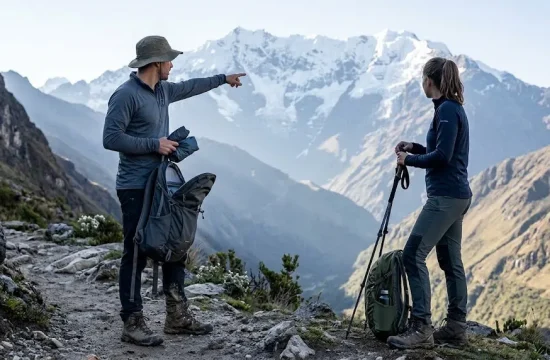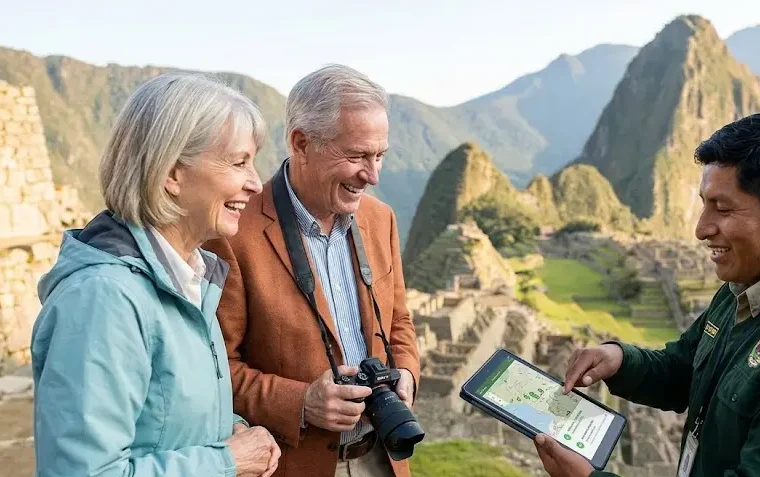
Una pareja de turistas senior disfrutando de una terraza en Machu Picchu con guía experto, validando su experiencia premium all-inclusive y su Machu Picchu tour cost.

Real Budget Guide: Deciding Your Machu Picchu Tour Cost Layout

Machu Picchu tour cost estimates are heavily influenced by a complex sequence of local infrastructure factors that standard travel guides routinely fail to explain with absolute honesty.Most international vacationers approach the reservation process expecting a straightforward all-inclusive price tag, only to discover that individual components must be combined like a puzzle. Starting your calculations directly from Cusco removes international flight variables, offering a realistic view of how your travel funds are allocated across the region. When analyzing quotes, investigating the structural traps of booking a cheap tour is an essential step to ensure your operator does not cut corners on essential safety, transport categories, or professional guiding licenses. Minor elements like train categories, shuttle bus transit, and canyon lodging premiums quietly reshape your final invoice, transforming an apparently simple day trip into an extensive financial venture that demands rigorous accounting discipline.

The initial illusion of low entry ticket fees

The official entrance ticket price feels highly reasonable for a UNESCO World Heritage site, creating a false sense of security among independent planners. Travelers see this affordable rate and immediately project their entire Machu Picchu tour cost structure around it. That is where expectations begin drifting away from reality.

The admission voucher is merely an administrative permit to pass the gate, not the financial baseline of the excursion. Building your expectations around this initial fee leads directly to a severe cash shortage before leaving your hotel in Cusco. The entry cost is a deceptive anchor that leaves out the structural outlays of transit.

Why the train network dominates your transportation budget

The private train network from Ollantaytambo to Aguas Calientes represents the single largest financial hurdle on the route. Because the sanctuary sits in an isolated cloud forest without highway access, rail operators maintain a virtual monopoly that charges premium global rates.

The rail tariff dominates your transactional layout, forcing a realignment of your travel funds. This operational reality requires strict comparison shopping across different train categories and departure blocks to prevent your transit expenses from consuming your entire regional budget. Choosing comfortable schedules means paying an explicit premium.

The hidden physical price of budget alternative routes

To bypass the expensive rail tickets, some independent backpackers choose alternative paths involving local multi-passenger vans and an extended trek along the train tracks from Hidroeléctrica. While these budget routes exist, there is a massive gap between planning theories and actual physical enjoyment.

Saving money feels entirely different when you are walking under intense sun, carrying heavy bags, and managing tight timetables. Overvaluing financial savings while undervaluing your physical energy reserves often compromises your capacity to enjoy the actual archaeological site upon arrival. The long walk eats up valuable daylight that belongs to the sanctuary exploration.

The shuttle bus decision above the canyon town

Arriving at the base town of Aguas Calientes brings another logistical choice that directly impacts your physical stamina and financial balance. The entrance to the ruins sits high above the town, requiring a decision between a steep uphill climb through the jungle or a public shuttle bus. Altitude and short sleep cycles quickly change your perspective.

The shuttle bus preserves your physical capacity for the tour, allowing you to walk the trails without immediate muscle fatigue. Consider these structural elements:

  • The shuttle bus preserves your physical capacity for the lengthy circuits around the citadel.
  • The steep climb consumes valuable morning energy and increases the chance of sweat exposure in the cold air.
  • The bus ticket adds a non-negotiable cash outlay that must be integrated directly into your upfront ledger.
Canyon lodging premiums and convenient dining inflation

Accommodation in a small valley town built exclusively around a global tourist draw carries an unnegotiable premium fee for proximity. Basic rooms cost significantly more than equivalent boutique hotels in Cusco, meaning underfunding this category results in extreme physical discomfort before your scheduled entrance time.

Food behaves in a similar way; restaurants near the train platforms capitalize on tired crowds, charging inflated rates for simple meals. Convenience spending inflates your total Machu Picchu tour cost silently, proving that minor out-of-pocket choices dictate the final number people describe as more than expected. Budgeting with a buffer ensures you absorb these local premiums without stress.