While day trips offer a quick glance at the lake, the overnight circuit provides the necessary pacing to truly absorb the silence, starry night skies, and agricultural rhythms of the islands. Choosing an organized package with transparent inclusions makes all the difference in your high-altitude journey.
What makes a Uros floating islands, Taquile, and Amantaní tour unique?
This multi-stop water circuit combines three distinct micro-cultures that have adapted to life on the world’s highest navigable lake in completely different ways.
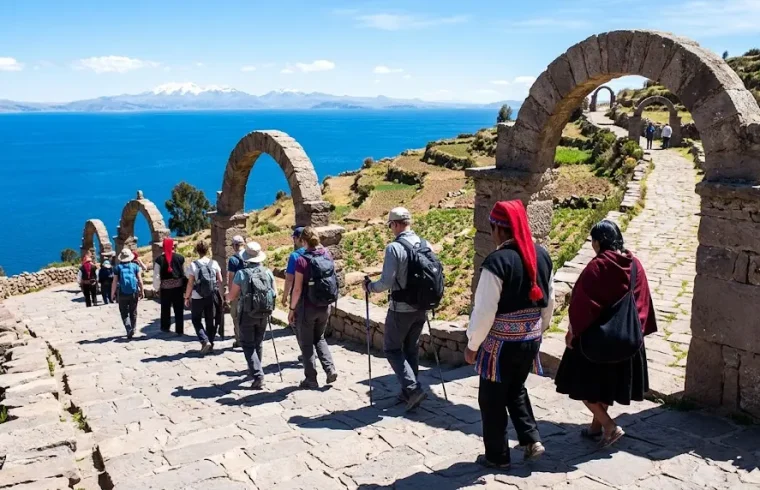
The journey begins with the buoyant reed islands of Uros, where indigenous families build homes, boats, and soil foundations from totora stalks. From there, boats head deeper into the open lake toward Amantaní and Taquile, where Quechua-speaking agricultural communities cultivate mountain terraces.
The progression from artificial reed soil to ancient stone terraces creates a fascinating visual and cultural narrative.
Experiencing all three stops in a single continuous loop offers **the most complete cultural survey of Lake Titicaca available**.
What should you expect during an overnight homestay on Amantaní Island?
Staying overnight on Amantaní is widely considered the emotional highlight of the Lake Titicaca circuit, but it requires an open mind regarding rural mountain living.
- Authentic village hospitality: Local families welcome guests into modesty-built adobe homes, serving home-cooked vegetarian meals made from quinoa, potatoes, and native vegetables.
- Sunset hike to Pachatata: A rewarding late-afternoon trek to ancient mountain shrines located over 13,000 feet above sea level.
- Rustic amenities: Running water and electricity can be limited, making warm layers and headlamps essential items for overnight guests.
The lack of commercial luxury is compensated by genuine warmth. Watching the sunset over Lake Titicaca from the summit of Pachatata is a memory that stays with travelers for a lifetime.
How does Taquile Island preserve its UNESCO-recognized weaving traditions?
On the second day of the tour, boats navigate from Amantaní to neighboring Taquile Island, famous worldwide for its Masterpieces of the Oral and Intangible Heritage of Humanity.
The world-famous male knitters of Taquile
Unlike most global weaving cultures, on Taquile, the intricate knitting work is performed exclusively by men using fine needles to create complex wool caps (*chullos*) that signal social status and civil role. A critical detail to understand is that these textile patterns are non-verbal historical records that convey family lineage and marital standing.
Purchasing textiles directly from the island cooperative ensures **fair trade support for native artisans** without commercial intermediaries.