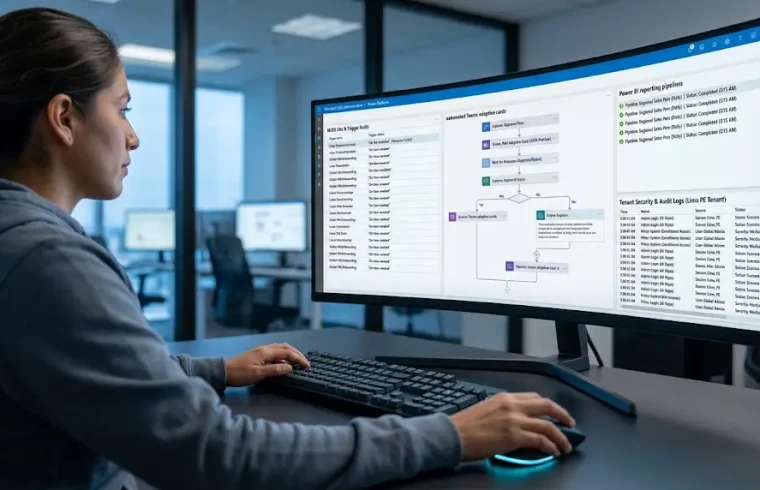
What drives ai process automation in microsoft 365 environments?
Adopting ai process automation in microsoft 365 leverages pre-existing enterprise cloud subscriptions to automate cross-application workflows seamlessly. Connecting native apps like SharePoint, Teams, and Outlook eliminates the need for expensive third-party integration software.
Deep integration across Microsoft 365 applications allows workflows to inherit tenant security settings and access permissions automatically.
Native ecosystem integration reduces software licensing overhead by up to 40% compared to third-party automation tools.
Automating processes inside familiar Microsoft 365 tools drives rapid user adoption and minimizes training costs.
What benefits do automated executive reports offer decision makers?
Manually compiling weekly status reports from multiple spreadsheets wastes valuable management time and introduces data inaccuracies. Automated workflows aggregate operational metrics from SharePoint lists and Dataverse tables, refresh Power BI semantic models, and distribute PDF executive summaries via Outlook.
Real-time visibility into KPI performance
Executives receive automated daily digests highlighting key performance indicators, pending approvals, and operational anomalies directly in their inboxes.
Automated reporting saves management teams up to 10 hours per week in manual data consolidation.
How does native M365 ecosystem integration reduce software churn?
Consolidating process automation within the Microsoft 365 ecosystem prevents “app sprawl” and simplifies IT governance. Operating within a single enterprise tenant ensures that user permissions, data loss prevention policies, and audit logs remain unified under central administration.
Employees complete tasks within applications they use daily, eliminating the friction of logging into multiple isolated SaaS portals.
Unified tenant governance reduces IT security management overhead by 50% across corporate environments.
Centralizing process automation inside Microsoft 365 enforces security compliance while improving user productivity.
How to scale ai process automation in microsoft 365 across teams?
Scaling ai process automation in microsoft 365 across an enterprise requires establishing a Center of Excellence (CoE) to govern workflow development and maintain data security standards. Reusable flow templates allow individual departments to deploy validated automation patterns quickly.
Recommended scaling strategy:
- Deploy the Power Platform Center of Excellence Starter Kit to monitor environment usage and security compliance.
- Create standardized workflow templates for common tasks like document approvals and team notifications.
- Establish clear tenant environment strategies separating development, testing, and production workflows.
Expanding intelligent automation across Microsoft 365 drives organizational efficiency and operational resilience. Structured governance ensures enterprise workflows remain secure, scalable, and continuously aligned with business goals.