Scaling Copilot business workflow automation enables enterprise organizations to streamline operational processes, lower labor overhead, and achieve measurable return on investment across technical business units in this 2026. As corporate leadership deploys artificial intelligence assistants across multi-tenant software environments, evaluating operational efficiency gains requires tracking hard telemetry metrics rather than relying on subjective user feedback. Automating high-volume administrative routines, such as invoice processing, customer ticket routing, and software deployment triggers, returns thousands of capacity hours to core engineering and management teams. Technology groups that implement structured workflow integration frameworks eliminate manual data transcription errors while accelerating project completion speeds significantly. Combining intelligent reasoning models with secure automated execution pipelines transforms passive conversational software into proactive operational execution engines. Establishing clear performance benchmarks ensures that artificial intelligence initiatives deliver sustainable financial value, optimize software seat licensing investments, and strengthen organizational competitiveness over long-term operating cycles.
How does Copilot business workflow automation drive measurable ROI?
Driving financial return through Copilot business workflow automation requires mapping software license expenditures directly against operational capacity hours reclaimed across departments. Measuring ROI extends beyond simple wage calculations to include accelerated product release cycles, reduced error remediation costs, and faster customer response times.
When automated assistants handle routine data processing tasks, personnel dedicate their time to high-value revenue-generating activities and strategic system design.
Quantifying reclaimed operational capacity hours provides the empirical financial proof required by executive board members.
The most significant financial returns surface when automated workflows eliminate long-standing operational bottlenecks in core business units.
What telemetry metrics track real-time operational efficiency gains?
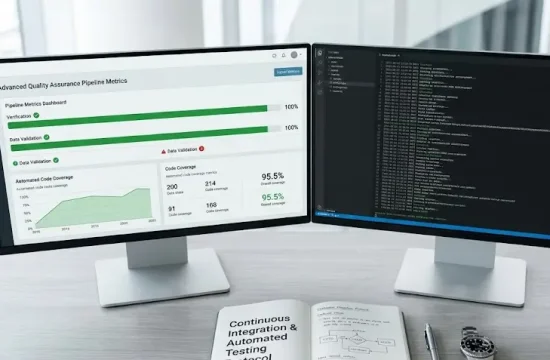
Administrative telemetry dashboards capture detailed operational logs, tracking task completion durations, query success ratios, and feature activation levels across enterprise user groups. Analyzing this data reveals which departments achieve rapid workflow acceleration and which teams require targeted prompt engineering support.
Correlating telemetry metrics with quarterly project delivery speeds provides complete visibility into organizational productivity trends.
Essential operational telemetry metrics include:
- Task completion velocity: Tracking the reduction in time required to complete complex multi-system workflows.
- First-pass accuracy rate: Measuring how frequently automated queries execute correctly without requiring prompt refinement.
- System error reductions: Monitoring the decline in manual data entry errors across connected ERP and CRM platforms.
How does automated document processing lower labor expenses?
Manual document parsing consumes thousands of expensive payroll hours annually as staff review contracts, extract invoice line items, and cross-reference shipping manifests manually. Automated document processing pipelines utilize intelligent assistants to parse unstructured files instantly, extracting key parameters and writing structured records to backend databases.
Slashing document processing times from hours to seconds generates immediate labor cost reallocations across enterprise operations.
Automated invoice reconciliation reduces processing overhead by forty percent in corporate financial operations.
Eliminating tedious manual paperwork improves employee job satisfaction while drastically lowering operational error rates.
Why is continuous prompt engineering optimization essential for scaling?
As business processes evolve, the prompts and system context supplied to automated assistants must be continually refined to maintain high operational accuracy. Establishing prompt optimization programs teaches personnel how to supply clear context, structured data schemas, and explicit output parameters to the model.
Optimizing prompt libraries increases query execution accuracy and prevents model confusion when handling complex, edge-case business tasks.
Continuous prompt refinement improves first-pass query accuracy by up to fifty percent across technical teams.
What steps expand Copilot business workflow automation safely?
Expanding automated workflows across an enterprise requires a structured deployment roadmap supported by robust governance committees, clear security perimeters, and continuous user training. Organizations should initiate pilot projects within standardized, data-heavy departments before rolling out automated pipelines enterprise-wide.
Reviewing specialized strategies for corporate workflow automation helps technology managers structure scalable, secure implementation phases.
Follow these steps to expand automation safely:
- Identify standardized, high-volume processes suitable for automated execution.
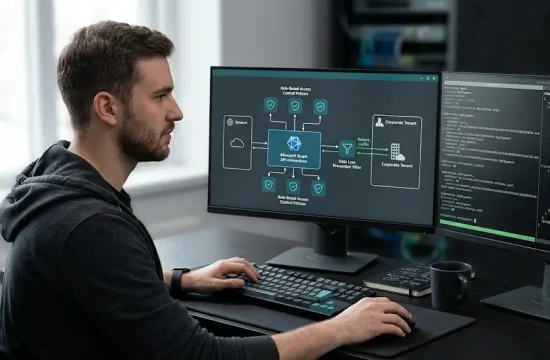
- Construct secure API connectors and establish role-based access control rules.
- Conduct role-specific prompt engineering workshops for active user groups.
- Audit system telemetry logs regularly to measure TCO and optimize performance.
Executing a disciplined plan ensures that Copilot business workflow automation delivers lasting competitive advantages. Strategic automation investments build a resilient, highly agile enterprise operational framework.